
Learn analog lens focal length basics
Start with Entendendo as Distâncias Focais em Lentes Analógicas para Fotógrafos Iniciantes so you don’t have to guess what each lens does. Focal length is the number on the lens in millimeters — 24mm, 35mm, 50mm, 85mm — and it tells you the angle of view and how large subjects appear on film. On film cameras that millimeter number matters more than brand: it changes how scenes expand or compress and how much background you include.
Think of a lens as a voice for your photos. A wide lens (low mm) announces place and pulls in scenery; a telephoto (high mm) whispers detail and isolates a subject. That voice affects composition, working distance, and the feel of depth. Shoot a whole roll with one lens — a 50mm for everyday, a 35mm for streets, an 85mm for portraits — and your eye will start matching lenses to moments.
What focal length is
Focal length is the distance from the lens’s optical center to the film plane when focused at infinity, measured in millimeters (mm). Practically, it maps to field of view: low numbers show more, high numbers show less.
UM prime has one focal length and makes you move your feet. A zoom changes field of view without moving. Both teach useful skills: primes teach framing, zooms teach timing.
How it shapes your photos
Focal length controls perspective e compression. Short focal lengths make foreground objects appear larger relative to background; long focal lengths compress distance and flatten planes — useful for portraits and sports.
It also affects depth of field. Long lenses at wide apertures blur backgrounds and isolate subjects. Short lenses keep more in focus, suiting landscapes and crowded scenes.
One quick rule to remember
Smaller mm = wider view; larger mm = narrower view and more compression.
See focal length, field of view on film
You need to see how focal length changes what the camera records on film. Think of focal length as the size of the window: a short number gives a wide view, a long number gives a narrow view. If you’re reading “Understanding Focal Lengths in Analog Lenses for New Photographers,” this is the core idea.
Test lenses side by side: frame the same scene at fixed positions (mark the floor or wall), then compare prints or scans. UM 50mm on 35mm film feels natural; 24mm pushes things away; 200mm brings distant subjects close. Those tests quickly train your eye to each field of view on different film types.
How field of view changes with lens
Short focal lengths capture more scene — great for landscapes, interiors, and dramatic foregrounds (e.g., 24mm, 28mm). Long focal lengths narrow the view and create tighter framing, changing depth relationships (e.g., 135mm, 200mm).
Match focal length to film frame
Film format matters. On 35mm, 50mm often feels normal; on medium format, the same 50mm looks wider. Choose focal lengths based on your subject: street work often uses 35–50mm (35mm film); portraits favor 85–135mm; landscapes go wider (24–35mm).
Measure FOV with simple tests
Fix your distance, tape marks, and shoot the same spot with different lenses. Compare how much fits in frame. This trains your eye without special gear.
Choose wide-angle vs telephoto (analog)
Choosing wide or telephoto is like picking shoes for a trip — the wrong choice slows you down. Entendendo as Distâncias Focais em Lentes Analógicas para Fotógrafos Iniciantes helps: wide lenses (under 35mm) pull in scenes and make space feel huge; telephotos (over 70mm) tighten the frame and bring distant things close. Let the story lead the lens choice.
Wide lenses are for showing environment and scale; telephotos isolate and flatter subjects with background blur. Film forces commitment — one roll teaches how distance, perspective, and focal length shape mood.
When to use wide angle for scenes
Use um wide angle when environment matters: streets, interiors, and landscapes. Put a foreground element close to the camera to add drama and lead the viewer through the frame.
When to use telephoto for subjects
Pick telephoto to isolate a person or detail from distractions. For portraits, telephotos smooth features and blur backgrounds; for wildlife or sports, they let you shoot from a distance without disturbing the subject.
Pick one lens for travel photos
If you must choose one, take a 35mm ou 50mm prime on film. 35mm is lively and wide enough for streets and landscapes; 50mm is close to human vision and great for portraits and details. A single lens forces movement and seeing, which accelerates learning.
Compare prime vs zoom film lenses
Primes are single-focal-length lenses: lighter, often sharper, and faster (wider apertures). Zooms cover many focal lengths and offer framing flexibility without changing lenses. Primes are like a pocket knife; zooms like a Swiss Army — both useful.
Optically, primes usually win on contrast, sharpness, and less distortion because they use fewer elements. Modern zooms can be excellent, trading a bit of peak performance for major convenience. Choose by cost, weight, and how you like to work: primes for deliberate composition, zooms for events and travel.
Why primes give sharper images
Primes use fewer elements, leading to less light scatter and higher contrast. Wide apertures (f/1.8, f/1.4) give creamy bokeh and better low-light performance — great for portraits and night scenes.
Why zooms give framing flexibility
Zooms let you quickly reframe without swapping glass, saving moments you’d otherwise miss. They also reduce gear load: one zoom can replace several primes.
Choose by your shooting style
If you prefer planned, intimate shots, pick primes. If you need to adapt fast or travel light, pick a reliable zoom.
Control focal length, depth of field on film
You shape a scene by choosing focal length and film format. Entendendo as Distâncias Focais em Lentes Analógicas para Fotógrafos Iniciantes helps you predict how a 50mm on 35mm feels versus an 85mm ou 135mm that pulls and creams the background. Treat lenses like brushes that change image texture.
On film, depth of field behaves like digital, but grain, highlight roll-off, and color response alter the look. Mix focal length and shooting distance to craft mood: dramatic portraits, roomy landscapes, or intimate details. Start with a simple kit — one wide, one normal, one tele — and shoot the same scene at the same aperture to compare.
How focal length affects background blur
Longer focal lengths compress space and make backgrounds appear larger and softer; telephoto lenses yield noticeable blur even at mid apertures. Shorter focal lengths keep more in focus and show more environment.
Aperture and focal length together
A wide abertura (small f-number) reduces DOF and increases blur. Combine a wide aperture with a longer focal length to isolate subjects quickly. Distance to subject and background distance also matter — open up, step closer, or move the background farther away for stronger separation.
Use DOF to isolate your subject
To isolate: open the aperture, increase focal length, and put distance between subject and background — and, if possible, step closer to your subject.
Pick portrait focal lengths — film photography
Start with Entendendo as Distâncias Focais em Lentes Analógicas para Fotógrafos Iniciantes to know what each lens feels like on film. On 35mm film, portraits commonly sit around 50mm to 135mm. Tight headshots use 85mm–105mm; half-body or environmental portraits use 50mm or 35mm.
Primes are especially useful for portraits: fast primes (f/1.8–f/2) help in low light and create pleasing background separation. Shoot rolls with one or two lenses to learn how distance, aperture, and focal length shape the look you want.
Best focal lengths for headshots
On 35mm film, 85mm is a classic for headshots; 105mm ou 135mm add more compression and background blur. On medium format, treat 80–120mm similarly and stand a little farther back.
How focal length changes face look
Wide lenses like 35mm force you close and can exaggerate features (larger noses, rounder faces). Longer focal lengths (85–135mm) compress features and create a flattering, natural plane.
Stand back for flattering results
For flattering portraits, step back and use a longer lens. Distance plus compression yields better proportions.
Understand perspective compression with film lenses
Perspective compression makes distant elements appear closer to your subject. Longer focal lengths narrow the view and require you to stand farther back, which reduces perceived space between near and far objects. For a primer, read “Understanding Focal Lengths in Analog Lenses for New Photographers” and then try portraits at varying distances to see the effect.
How telephoto compresses distance
A telephoto doesn’t change scene geometry but narrows what you show and makes you step back. That distance change compresses layers so backgrounds loom closer.
Use compression to flatter subjects
Compression softens facial features and can make portraits more flattering. Pose subjects with breathing room and shoot from a distance with a telephoto to emphasize eyes and cheekbones without distortion.
Move farther for stronger compression
To increase compression: move farther away and use a longer focal length or higher zoom so your subject still fills the frame.
Choosing focal length for landscapes (film)
Pick focal length to tell the landscape story. Wide focal lengths (24mm or wider on 35mm) capture sky and foreground for dramatic scale. Telephotos (85–200mm) isolate distant details, compress layers, and create moody studies.
Balance film grain, lens sharpness, and camera movement. Slower ISO and narrower apertures retain detail but require steadier technique.
Why wide lenses suit wide views
Wide lenses exaggerate depth and lead the viewer through the frame. When you stand close to a foreground element, the wide angle magnifies that relationship and increases scale.
When telephoto finds distant details
Telephoto lenses compress and reveal shapes and rhythms you can’t see up close — use them for intimate landscape studies and isolated subjects.
Use a small aperture and tripod
For deep focus and fine detail on film, use f/8–f/16 and a sturdy tripod to avoid blur and keep grain manageable.
Crop factor and focal length (film context)
If you’re learning both film and digital, Entendendo as Distâncias Focais em Lentes Analógicas para Fotógrafos Iniciantes helps translate between formats. Crop factor compares sensors to the 35mm film baseline. A 50mm on full-frame/35mm behaves differently on an APS-C body (e.g., 1.5x crop ≈ 75mm) — tighter and more tele-like.
Film formats vary: medium format lenses look wider on larger film. Learn common crop factors (1.5x, 1.6x, 2x) so you can pick the right lens quickly.
How crop factor changes effective view
Multiply the lens number by crop factor (e.g., 50mm × 1.5 = 75mm equivalent) to know how tight the frame will feel. A cropped sensor narrows field of view, so you either step back or use a wider lens.
Manual focus lens focal-length guide
Start with a few focal lengths and learn their personalities:
- 24mm — wide for rooms and landscapes
- 35mm — street camera: natural but slightly wide
- 50mm — classic, easy to use and learn on
- 85–135mm — portraits; compression flatters faces
On APS-C: 35mm ≈ 52mm, 50mm ≈ 75mm. For vintage manual lenses, pick smooth focus throws and a clear aperture ring — a simple 50mm will teach you more than autofocus doing the work.
Convert focal numbers to real view
Real view = focal length × crop factor (e.g., 50mm × 1.6 = 80mm on Canon APS-C). Full-frame or true 35mm film uses 1.0×, so the lens number stays the same. Keep these multipliers handy to avoid surprises in framing.
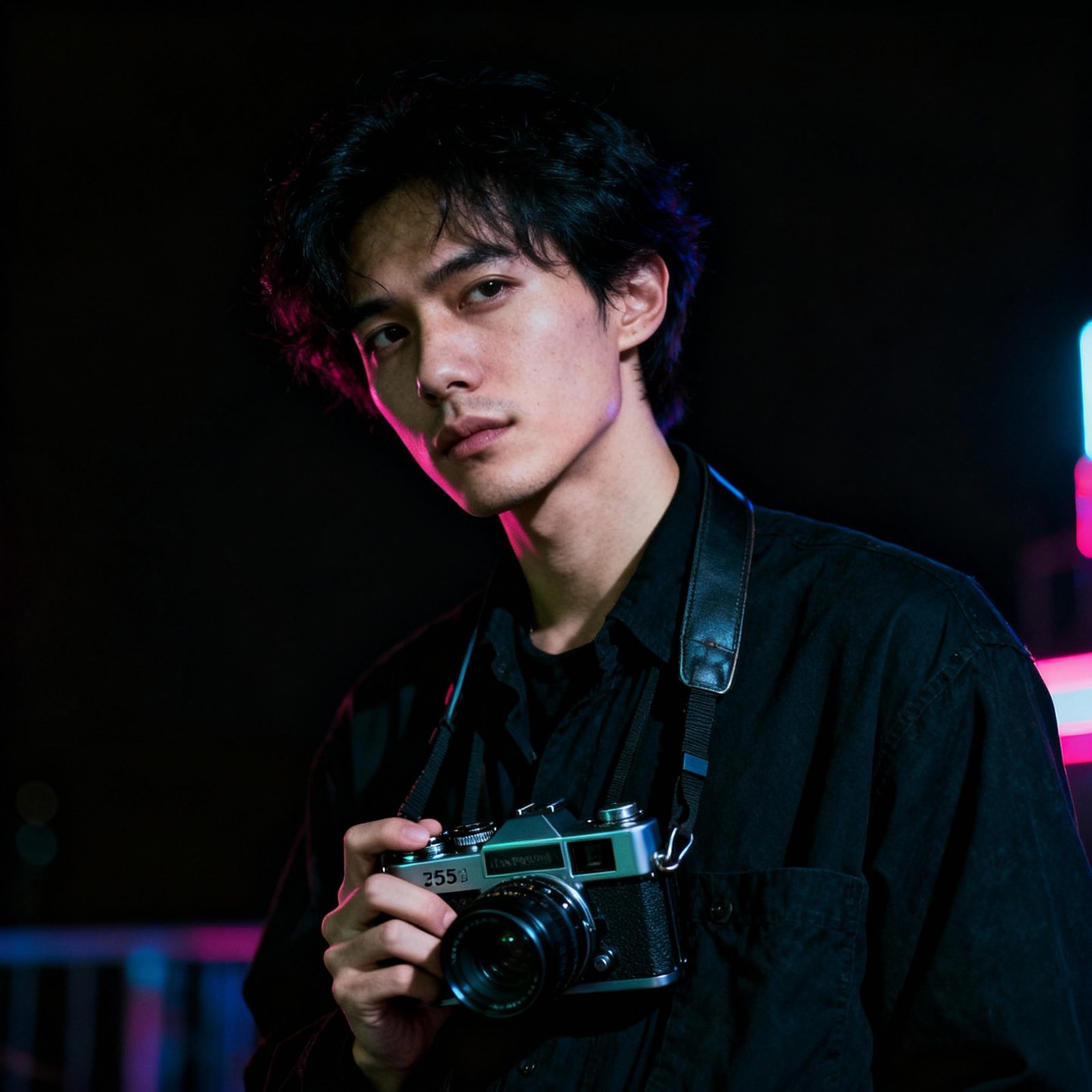
Matheus is a passionate analog photographer and content educator dedicated to preserving the art of film photography. With over 12 years of experience capturing moments through 35mm cameras, he has transformed his obsession into a mission: sharing deep knowledge with a global community of enthusiasts.
He began his journey at 16 with a Pentax K1000 inherited from his grandfather, a photojournalist who documented historic events in the 1970s. That simple yet powerful camera sparked an insatiable curiosity about how light, chemistry, and intention combine to create unforgettable images.
Matheus has developed expertise across multiple disciplines: film selection and storage, advanced development techniques, composition, and creative post-processing. He is a passionate advocate for the analog philosophy — the belief that shooting film is not just a technical choice, but a way of being present in the world and thinking deeply about every frame.
His educational approach is unique: combining technical rigor com creative inspiration. Matheus believes that understanding the science behind analog photography liberates photographers to explore their artistic vision without limits.
When not writing or shooting, Matheus explores cities with his Leica M3, mentors emerging photographers, and conducts workshops on analog photography in local communities.
His mission with RIVERZOG: To prove that analog photography is not nostalgia — it’s a conscious choice for quality, intention, and depth in an increasingly digital world.