
Sturdy tripods for long exposure film
You want a tripod that gives rock-solid stability for long exposures. Pick a tripod with a high weight capacity that’s at least 1.5 times heavier than your heaviest camera and lens. Metal legs like carbon fiber or aluminum matter: carbon fiber is lighter and absorbs vibration better, aluminum costs less but can be heavier. Think of the tripod as the foundation of a house — shake the foundation and the whole picture falls apart.
Look for legs with secure locks and feet that match where you shoot. Twist locks are fast and low-profile. Flip locks are quick to operate with gloves. Rubber feet work on pavement. Spiked feet bite into dirt. If you switch locations — city streets, beaches, or mountains — swap feet or carry a small set of spikes and rubber covers. Small choices here pay off when you get that one sharp night shot.
Don’t forget accessories. A low center column, a weight hook, and a spreader can change how steady your rig is. If you use film and long exposure techniques, add Advanced Accessories for Long-Exposure Analog Techniques like counterweights or dampeners to cut blur. These extras are cheap insurance when you want that perfectly clean negative.
How you pick the right tripod legs
Start with the basics: height, packed length, and weight. You want the tripod tall enough so you aren’t hunched over, but short enough to carry. If you hike, favor lighter carbon fiber legs even if they cost more. For car or studio work, heavier aluminum can be fine. The right legs make setup faster and shooting less of a chore.
Check the leg sections and locks. Fewer sections usually mean more stiffness; three-section legs are a good balance. Look for locking mechanisms you can operate with cold hands and test twist and flip locks in person if you can — they change how the tripod feels when you are fumbling in the dark between exposures.
Tripod heads that match your film camera
Match the head to your camera and style. If you shoot with heavy medium-format or rangefinder rigs, pick a head rated well above your gear’s weight. A ball head is quick and compact. A geared head gives tiny, steady moves for framing film shots. Pan-tilt heads work if you like separate axis control. Each style feels different; try them and trust your hands.
Quick-release systems matter for field work. A secure quick-release plate saves time and keeps film safe from drops. Pick a plate that locks solidly and won’t slip under long exposures. Also think about the head’s sweep and friction — you want smooth movement, not jerky stops.
Quick setup tips for stability
Spread the legs wide and low for a lower center of gravity, and always point one leg toward the shot for extra balance. Lower the center column or avoid it if possible; it raises the center and adds wobble. Hang a weight from the hook, use a sandbag, and set the tripod on firm ground. Use a cable release or remote, and if your camera has mirror lock-up, use it to cut vibration — little moves make big differences on long film exposures.
Best cable release for film cameras
You want a cable release that fits your camera and stops vibration. Pick a metal, lockable release if you shoot long exposures. Look for the right thread size, a decent cable length, and a smooth plunger that won’t stick. A good release feels solid in your hand and clicks cleanly without jerking the shutter.
If you love long exposures and dark skies, choose a release with a locking mechanism so you can hold the shutter open hands-free. For Advanced Accessories for Long-Exposure Analog Techniques, a lockable threaded release is gold. It keeps everything steady while you step back, frame the scene, and breathe easy.
Skip flimsy plastic bits. Go for brass or stainless steel heads and a braided cable sheathing. You’ll pay a little more, but your negatives will reward you with sharp stars and fine grain.
How you use a cable release safely
Start by mounting your camera on a stable tripod. Attach the release gently to the shutter’s socket. Take one careful test press to check function. If your release locks, engage the lock before you move away from the camera so nothing shifts mid-exposure.
Keep the cable tucked so it won’t snag or pull the camera. Don’t force threads if they’re stiff—back off and try again. Hold the camera with one hand when you detach the release so it won’t tip or fall. Small habits like these keep your gear safe and your shots steady.
Compare mechanical and threaded releases
A mechanical (plunger) release gives you quick presses and works on many older shutters. It’s simple: press to trigger. It’s great for short exposures and for cameras without a screw socket.
A threaded release screws into the camera and usually offers a locking bulb or a screw lock. That lock is your friend for long exposures because it removes your hand from the camera entirely. Threaded models can be a touch slower to attach, but they beat vibration every time you need hands-free exposure control.
Locking and detaching safely
Always unlock the release before you unscrew or detach it, and support the camera with your free hand while you work. Unscrew slowly, keeping the camera level so nothing tilts. After removal, store the release in a pocket or pouch so the cable won’t catch on straps or gear as you move.
Bulb release for vintage cameras
If you shoot film with older gear, a bulb release becomes one of your best friends. You flip the shutter to bulb mode, press the release, and hold the light for as long as you want — minutes or even hours. With Advanced Accessories for Long-Exposure Analog Techniques in your bag, you turn stubborn old cameras into night-time storytellers.
Not every release fits every camera. Some vintage bodies take a mechanical cable, others work with a small threaded electronic remote or an adapter. You want a release that threads cleanly, feels firm in your hand, and locks when you need hands-free time-lapses or star trails.
Think of the release as the hinge between control and chaos. A smooth release cuts vibration. A lock keeps the shutter open without you jittering the shot. Spend a little on quality and your long exposures will be sharp, steady, and full of mood.
When you use bulb mode on film
You use bulb mode when the scene needs more time than the camera’s timer gives you. Night skies, light painting, moving water after dusk — these are the times to hold the shutter and watch light draw itself across the frame. Film slows down differently than digital; you’ll often need long holds to capture the same glow.
Film also brings reciprocity failure into the equation. That means a one-minute exposure might act like two or three in terms of light response. Test with short frames first. Write down settings. With practice you’ll predict how your film behaves and avoid surprises.
Choose a bulb release for long holds
If you plan to hold exposures for minutes or hours, pick a release that locks firmly and won’t creep. A mechanical cable with a thumb lock or a detent feels simple and reliable. If you want timed sequences, go for an intervalometer or an electronic remote with long-battery life.
Feel the grip before you buy. Cheap plastic sticks, slips, or wears out under long pressure. Look for smooth cable action and a solid connector. When you invest in the right tool, your hands stay free, your camera stays still, and your creative ideas actually make it onto film.
Prevent accidental exposure
Cover the viewfinder, use a lens cap while setting up, and tape down dials you won’t touch to avoid a stray bump. Choose a release that locks, and mark it so you won’t trip it by mistake. Little habits like a taped shutter or a covered eyepiece stop one mistake from ruining a perfect long exposure.
Neutral density filters for film photography
Neutral density filters are your secret weapon when you want long, silky exposures on film. They cut light evenly so you can open the shutter for seconds or minutes without overexposing the frame. If you love motion blur—think smooth water or soft cloud trails—ND filters let you use slower shutter speeds while keeping your aperture and film speed where you want them.
Pick the right filter and you control the mood of the image. A 3-stop gives subtle blur; a 10-stop turns a busy river into glass. On film, that control is powerful because you can’t preview shots instantly. Trust the math, trust the glass, and carry spare filters so you can react when light changes.
Think of ND filters like sunglasses for your lens. They help you block light without changing color or contrast when you pick quality glass. When you add them to your kit, you’ll find new creative choices. Combine them with a sturdy tripod and a cable release, and you’ve got a simple recipe for stunning long exposures. Remember Advanced Accessories for Long-Exposure Analog Techniques as you build that kit.
Why ND filters matter for long exposures
ND filters let you slow the shutter while keeping your chosen aperture and film ISO. That matters because aperture controls depth of field and film ISO affects grain. If you must use a wide aperture for shallow focus, an ND filter lets you do that in bright light without blowing out the image.
On a practical level, ND filters rescue you from tiny apertures that cause diffraction or from cranking up ISO and adding unwanted grain. With the right filter, long exposure becomes a tool instead of a compromise. You’ll see results fast: smoother water, streaked skies, and a cinematic feel that film handles beautifully.
How you calculate stops for film
Calculating stops for film is a simple step-by-step habit you’ll use all the time. Start with your meter reading for correct exposure. Then subtract the number of stops the filter blocks from the shutter speed. For example, if your meter shows 1/60s and you add a 6-stop filter, multiply the exposure time by 64 and shoot at about 1s.
Carry a small table or use a phone app, or memorize common values: 1 stop = 2× time, 3 stops = 8×, 6 stops = 64×, 10 stops = 1024×. Mark the change on your notepad or film log so you can repeat the look consistently. This habit makes long exposures predictable and repeatable on film.
Mark filter stops clearly
Mark each filter with its stop value using a permanent marker or a printed label so you don’t guess in the field; clear labels save film and time. When you stack filters, add the stops together in your notes and double-check with a quick test shot. Clear markings keep your process fast and your results consistent.
Mirror lock-up techniques film SLR
You want the sharpest negatives you can get from your film SLR. Mirror slap is a tiny shove from the mirror that blurs long exposures and telephoto shots. Flip the mirror up before the exposure and you remove that shake, so your long exposures, macro work, and tight telephoto frames look crisp instead of soft.
Older film SLRs and modern manual bodies talk to you differently, but the idea stays the same: stall the mirror so it can’t move when the shutter fires. Small habits—mirror lock-up, sturdy support, and a careful trigger—make a big difference.
You don’t need fancy gear to start. A solid tripod, a basic cable release, and the camera’s mirror lock setting are enough to cut vibration. If you’re shopping, look into Advanced Accessories for Long-Exposure Analog Techniques to round out your kit and make the workflow smoother.
Use mirror lock-up to cut vibration
Flip the mirror up, wait a beat, then fire the shutter. That simple sequence removes the main source of internal movement on many film SLRs. In practice you set the camera to mirror‑lock mode, compose, lock focus, and then engage the lock so the mirror stays out of the way during the exposure.
This works best with long exposures or heavy lenses where even small shakes show up. Keep your camera steady on a sturdy tripod and avoid touching it after the mirror flips.
Combine lock-up with remote release
Pair mirror lock‑up with a remote release and you cut human contact out of the equation. A simple mechanical cable release or a remote shutter lets you trigger the camera without touching it, which reduces vibration to near zero.
If you shoot a lot of night scenes, consider a mechanical or electronic remote that matches your camera’s connector. Use the remote to fire the shutter after the mirror is locked up, and you’ll see more clean frames per roll.
Set delay times for sharpness
Give the camera a short pause between mirror up and shutter fire — 1–3 seconds is a good start — so any residual vibration dies away; for heavy lenses try 2–5 seconds. That tiny delay often turns a usable shot into a stunning one.
Reciprocity failure compensation film
Reciprocity failure happens when your film stops responding to light the way it usually does during very long exposures. The effective sensitivity drops, so your normal exposure will underexpose long shots. You must add exposure or change technique to get the image you want; think of it like your film getting tired on long shifts and needing overtime pay.
You’ll see different films behave differently, so testing is non-negotiable. Run a quick series of bracketed long exposures and note how much extra time each film needs at night or in low light. Bring Advanced Accessories for Long-Exposure Analog Techniques—like accurate cable releases, sturdy tripods, and helpful stopwatches—to make testing faster and more consistent.
Compensation isn’t random guessing. Use charts, test frames, and simple math to pick times that match your scene. Be bold: increase times, re-frame, and shoot again until the highlights and midtones look right. Your instincts will improve fast once you log results and repeat the process.
Read film reciprocity failure charts
Start by finding the row for your film and the column for your base exposure. Charts either give an extra number of stops to add or a multiplication factor for time. If a chart says 2 stops, you either double and double your time or multiply by four; if it lists x4, multiply the original exposure time by four.
Treat chart values as close guides, not gospel. Temperature and development method shift results, so use the chart, then test a nearby value. Keep your notes beside the chart; next shoot you’ll thank yourself for the saved guessing and better frames.
How you add extra exposure time
You can add time by switching to bulb mode and using a cable release or intervalometer for precise durations. If a chart gives a factor, multiply the base time; if it gives stops, convert stops to time (one stop = double the time). For example, a 1-second base exposure plus 2 stops becomes 4 seconds.
Another option is to break long exposures into multiple stacked exposures on the same frame if your camera and technique allow it. That’s handy when you want very long totals without leaving the shutter open continuously. Always test the final time on a scrap frame to confirm the tonal result.
Keep exposure logs during shoots
Carry a small notebook or phone note where you record film type, base exposure, chart correction, final exposure time, temperature, and any filter used; a single line per shot saves you hours later. These logs become your shortcut to consistent results and let you repeat winning combinations without guesswork.
Intervalometer alternatives for film cameras
You can get precise intervals without a modern intervalometer. Old-school tools and clever hacks let you shoot time-lapses and long exposures on film. Mechanical timers, electronic controllers, and simple watch-sync tricks each have strengths. Pick the one that fits your gear and style, and you’ll keep your shoots moving.
Start by matching the tool to your camera. If your body has a motor drive or electronic shutter, a modern controller will plug right in. If you shoot fully mechanical cameras, look for wind-up timers, cable releases, or devices that trigger the shutter without electrical contact.
Treat tests as part of the process. Run a short series of frames on cheap film or with the lens cap on to check timing and advance. Track exposures, wind steps, and any shutter lag with a note pad or phone. Small checks keep big rolls from going to waste and help you learn how each tool behaves with your camera.
Use mechanical timers and cable loops
Mechanical timers and cable releases are simple and rugged. You can set an old-fashioned wind-up timer to trip a cable at set intervals. That means no batteries and fewer electronics to fail in cold or wet weather. For long exposures, the same cable can hold the shutter open in Bulb mode.
You’ll need to manage film advance manually if your camera lacks a motor. Plan whether you’ll cock the shutter between frames or use a camera with a motor drive. Watch for vibration when the timer trips. Use a sturdy tripod, a firm cable mount, and gentle release pressure to keep frames sharp.
Electronic controllers that work with film
Modern interval controllers can be adapted to older cameras. Many offer simple delay, interval, and frame count settings. They trigger the shutter via standard cable connectors or hot shoe adapters, giving precise timing for time-lapse and repeating long exposures.
Before you plug in, check voltage and connector type. Older shutters can be sensitive to wrong voltages or polarities. Use opto-isolators or mechanical couplers when possible to protect contacts. A quick bench test with a dummy release saves expensive surprises.
Sync timing with your watch
A watch is a tiny back-up intervalometer. Set vibration alarms or countdowns for each shot and trigger the cable release by hand. This works well for slow sequences, experimental tests, or when tech fails, and it keeps you close to the scene and responsive to changing light.
Long exposure light leak prevention analog
Light leaks will ruin a long exposure in a heartbeat. You need to treat light leaks like a slow drip in a roof: small at first, then a mess. Inspect the film plane, back hinges, and any seams before you load film. If you spot glue residue, cracked foam, or a bent latch, fix it. A single pinprick can fog highlights and turn a nightscape into a wash of gray.
Bring a few go-to tools and parts on every outing. Carry light-seal foam, black gaffer tape, a small brush, and a spare camera gasket. Consider adding Advanced Accessories for Long-Exposure Analog Techniques to your kit—things like purpose-made darkslide caps and silicone gaskets make a real difference. Think of them as armor for your negatives.
Make testing part of your routine so leaks don’t surprise you in the field. Do a quick pre-shoot checklist: close the back, run your hands along seams, wiggle the darkslide, and give the camera a brisk shake to feel for looseness. That few minutes now saves an hour of regret later.
Seal backs, seams and camera gaskets
Start by replacing old foam seals if they’re cracked, sticky, or flattened. Use light-seal foam sized to your model and press it into place. If a hinge is loose, tighten the screws or add a thin strip of black gaffer tape to block light. Feel for drafts; if air moves, light can get in.
Pay attention to wear points: the back edges, the latch, and around any removable panels. Keep a small roll of black gaffer tape and a spare gasket in your bag. A quick field repair with tape often saves a whole film holder.
Test darkslides and film holders before use
Darkslides and holders are common culprits. Slide each darkslide fully in and out to check for smooth action and a firm lock; if it sticks, dirt or a bent edge may let light sneak through. Inspect the edges for gaps and press the holder closed to feel whether it sits snug against the camera body.
Run a simple light test before loading valuable film: in dim light, close the holder and shine a flashlight at the seams, watching from the film side for any glow. Clean holders with a blower and soft brush; dust and grit wear the edges and weaken the seal. Keep an extra holder—one failure shouldn’t cost a shot.
Inspect in low light for leaks
Do this inspection in a dim room or at dusk with a small red LED headlamp or phone light as your single bright source; close the back and look from the film side for pinpricks or streaks of light. Move the light slowly around seams and hinges—tiny leaks show up like stars. Fix anything you see before you load film.
Essential analog long exposure accessories
You want gear that helps you nail long exposures without fuss. Start with a sturdy tripod and a solid head. Add a cable release or mechanical timer so you don’t touch the camera during the exposure. Those simple tools cut blur more than any fancy lens.
Next, think about light control and film handling. Carry ND filters for daytime long exposures and a light meter for tricky scenes. Bring spare film rolls, a dark slide or film holder, and a cleaning cloth so dust doesn’t wreck the frame. These are the kind of things you’ll be glad you had when the light fades.
You’ll want a few comfort items that speed the whole process. Pack a headlamp with a red filter, extra batteries, and a rain cover. Keep your kit organized so you can move fast at night. Using these Advanced Accessories for Long-Exposure Analog Techniques will make your sessions smoother and more fun.
Advanced Accessories for Long-Exposure Analog Techniques — what to add
- Counterweights and dampeners (reduce sway and micro-vibration).
- Lockable threaded cable releases and sturdy mechanical bulbs.
- Purpose-made darkslide caps, silicone gaskets, and spare light-seal foam.
- ND filter holders, a set of quality ND glass (3, 6, 10 stops), and clear labels.
- Leveling base and quick-release system for fast, repeatable framing.
- Opto-isolated interval controllers or mechanical timers for film cameras.
- A compact exposure logbook, spare film, and a red-filter headlamp.
These items, specifically chosen as Advanced Accessories for Long-Exposure Analog Techniques, are inexpensive relative to the time they save and the frames they rescue.
Film photography long exposure gear checklist
Before you head out, run through a short, hard checklist. Check tripod legs, the quick-release plate, and that the camera mount is tight. Confirm the shutter cock and film advance are set. If anything wiggles, fix it now.
Also check consumables and backups. Load a fresh film roll, pack extra film, and bring a spare battery for your meter or light. Have a film-changing bag if you might swap rolls in the dark. One forgotten item can cost you a night of shooting.
Accessories that save time and reduce blur
Speed and steadiness win here. Use a quick-release plate and a leveling base so you can swap angles fast without loosening clamps. A remote cable or mechanical intervalometer lets you trigger long exposures without touching the camera. Small upgrades like these save minutes and stop blur.
Tame vibration and drift with a few tricks. Hang a weight from the tripod hook on windy nights. Use gaffer tape to lock loose knobs. Try mirror lock-up or a delayed shutter for SLRs if you still get micro-shake. These moves are simple, but they sharpen your images.
Store gear ready for night shoots
Keep a dedicated bag packed with essentials: tripod, remote, ND filters, fresh film, headlamp, and spare batteries. Label pockets so you grab the right roll fast. Charge batteries and test gear the day before. That little prep stops panic when the sun drops.
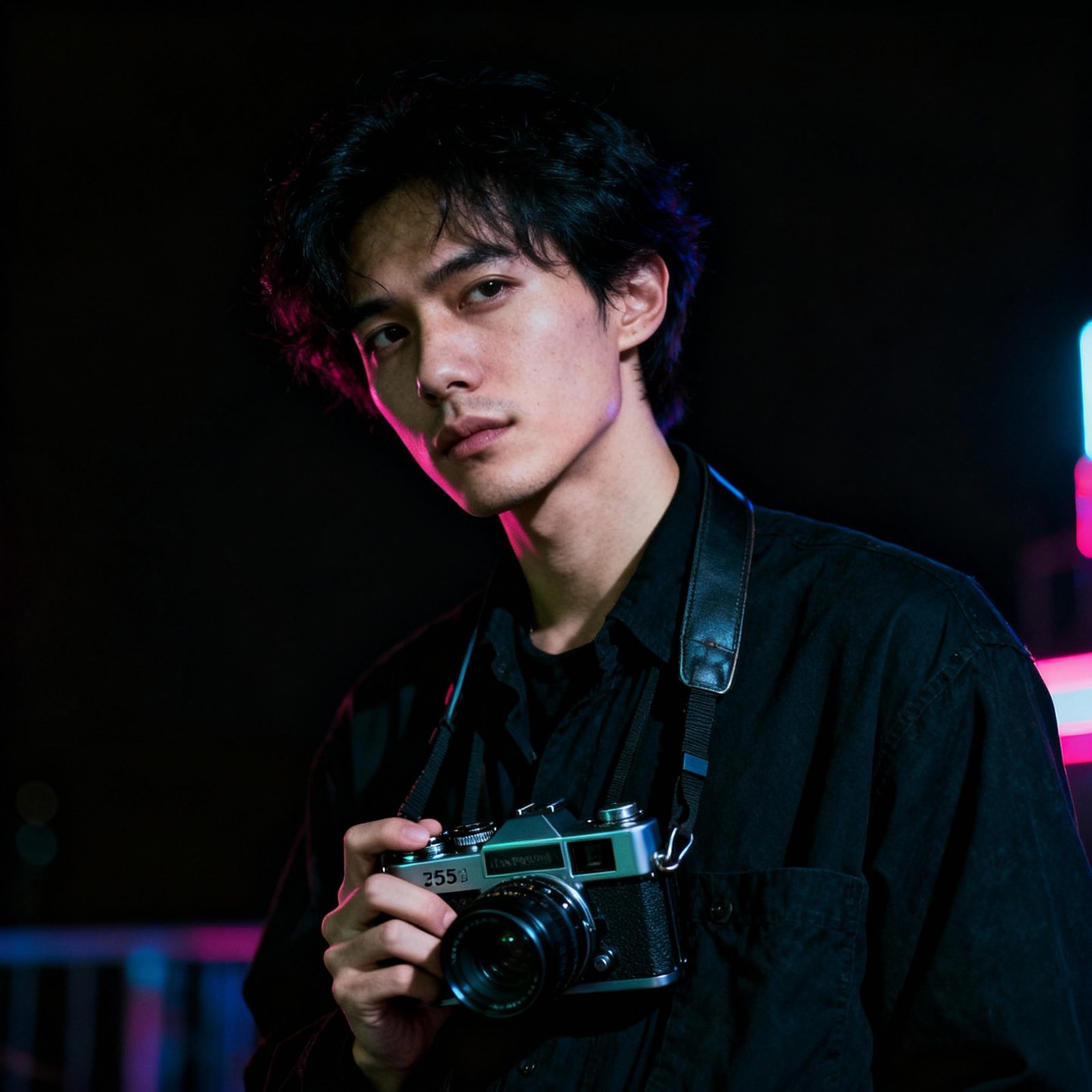
Matheus is a passionate analog photographer and content educator dedicated to preserving the art of film photography. With over 12 years of experience capturing moments through 35mm cameras, he has transformed his obsession into a mission: sharing deep knowledge with a global community of enthusiasts.
He began his journey at 16 with a Pentax K1000 inherited from his grandfather, a photojournalist who documented historic events in the 1970s. That simple yet powerful camera sparked an insatiable curiosity about how light, chemistry, and intention combine to create unforgettable images.
Matheus has developed expertise across multiple disciplines: film selection and storage, advanced development techniques, composition, and creative post-processing. He is a passionate advocate for the analog philosophy — the belief that shooting film is not just a technical choice, but a way of being present in the world and thinking deeply about every frame.
His educational approach is unique: combining technical rigor with creative inspiration. Matheus believes that understanding the science behind analog photography liberates photographers to explore their artistic vision without limits.
When not writing or shooting, Matheus explores cities with his Leica M3, mentors emerging photographers, and conducts workshops on analog photography in local communities.
His mission with RIVERZOG: To prove that analog photography is not nostalgia — it’s a conscious choice for quality, intention, and depth in an increasingly digital world.